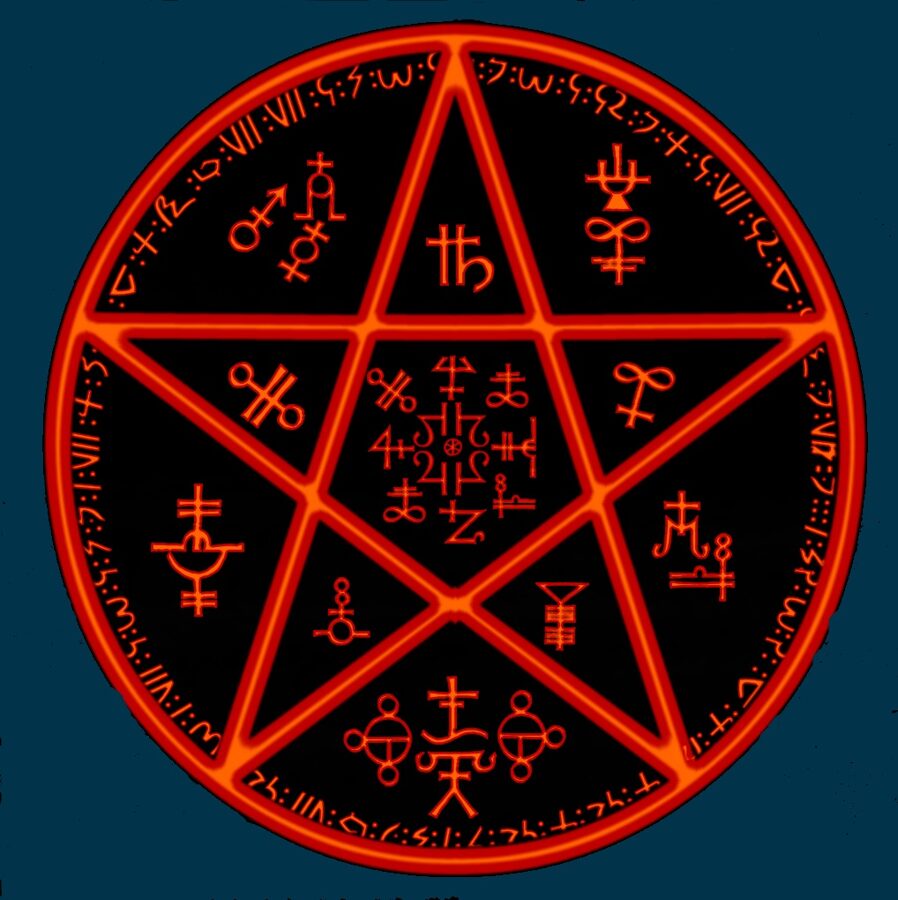
The Mage’s Crown: How to Fool the Spirits
The mage is not the conqueror in a ritual; the mage is merely the battlefield. A deep dive into the true meaning of the Crown of Spirits and divine authority.
This post is about the "crown of spirits," or as it is called in other sources, the "Master’s crown."
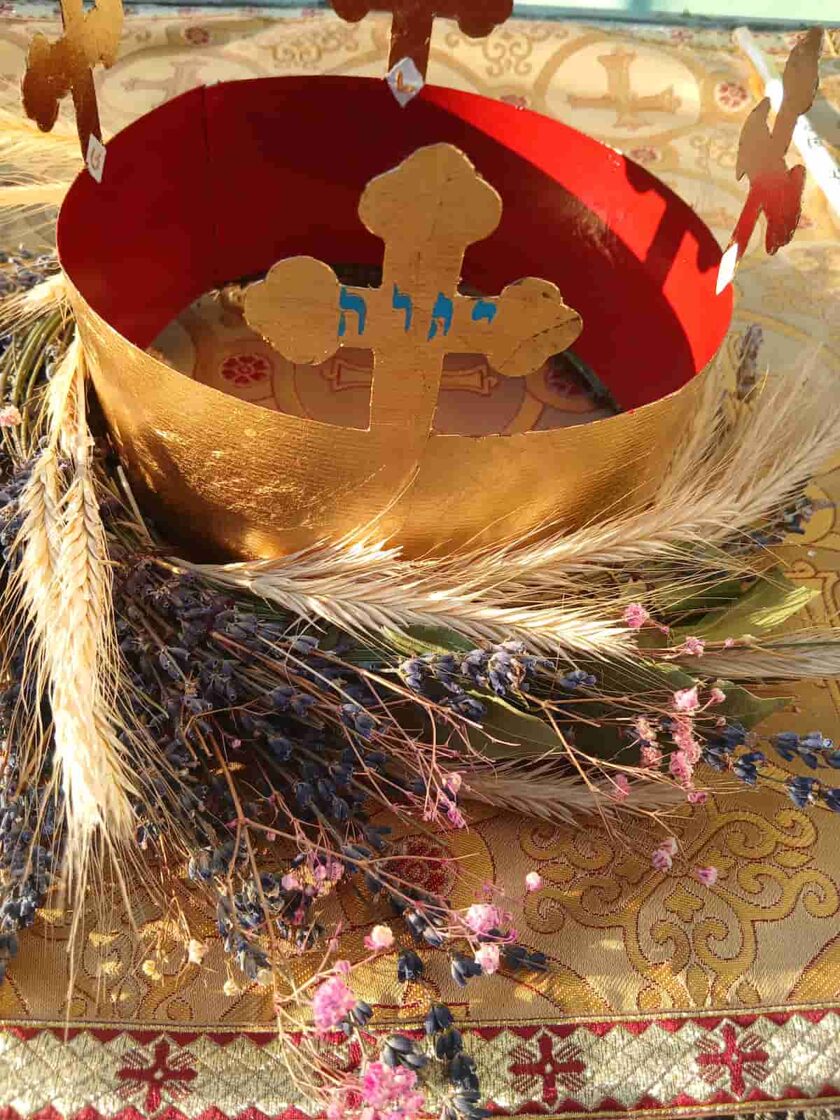
Here is what Mathers writes about it in his version of the Key of Solomon: — "Furthermore, the Master of the Art should have a crown of virgin paper, upon which these four names must be written: — JEHOVA, in the front; ADONAI, behind; EL, on the right; and GIBOR, on the left. These names must be written with the ink and pen of the Art, which we will discuss in the appropriate chapter. The disciples must also have a crown of virgin paper, upon which these divine symbols must be marked in red." I don’t know why Mathers decided to leave "Jehova," because it is simply an incorrect translation of the name of God — יהוה, which you can see on the ceiling of almost every Orthodox or Catholic church (it's not even about the translation, but the pronunciation; this name has no pronunciation, anyone who knows Hebrew will understand; anyway, I can make a separate post about the names of God if at least someone writes that they are interested). In some manuscript variants, these names are replaced with: Agla, Aglai, Aglatha, Aglaoth, or similar variations, which changes the very logic, because these are all acronyms of entire concepts or phrases from the Tanakh, aka the Old Testament. The image shows a compilation of these moments from various manuscripts, which I took from Peterson's esotericarchives. Also, in his book "Techniques of Solomonic Magic," he writes that practically all versions of the grimoires describe the crown as a maximally simple and primitive paper ring or a paper hat "like for a party." Although he is one hundred percent right, I decided to take a different path. Well, how did I decide — it was passed down to me by the ruling spirit of the zodiac sign Cancer. Passed down with clear instructions, and I rarely argue in such matters. So that's what I did — a wreath of many herbs, children, and flesh of the spirits of the fields (I love fields very much; even when I was choosing a house, I was won over by the fact that wheat and corn fields were nearby).
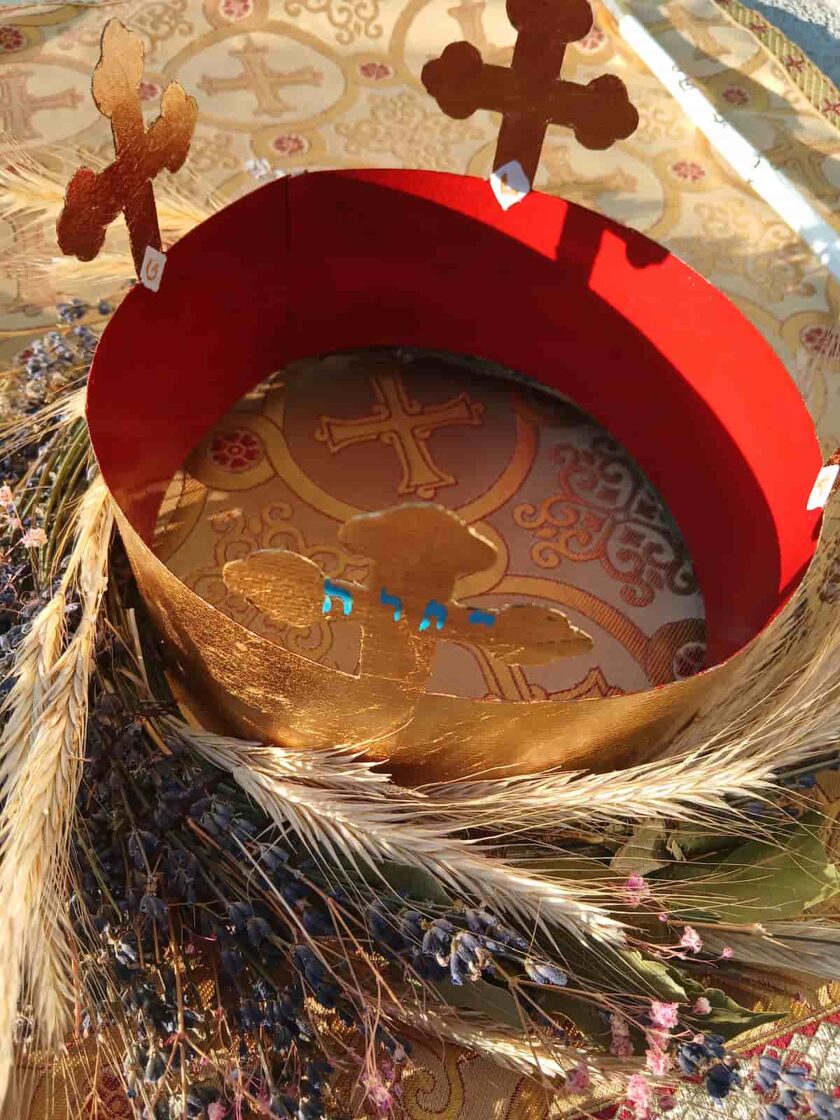
The inner part is made of paper, just as the grimoires say. Also, I decided to make the crown look more like an actual crown by adding four crosses facing the four cardinal directions. But why is this crown needed in the first place, and why did I make it exactly now, even though I received the instructions to make it back in the spring? Because it is an integral part of the evocation of the demon Sitri (whom I already talked about in my last post), which I am going to perform during the eclipse on August 28, 2026. And here is why — not only Peterson but many other authors agree on one thing: the mage's ritual, his tools, clothing, and everything else were conceived by ancient mages as a way to trick the spirits. It was a way to mimic the majesty of God to make them believe that standing before them is a living god who commands them, leaving them no choice but to obey. All the signs of divine power on the mage's tools served this exact purpose. And they are right, it really is a working method. Even Agrippa, in his De Occulta Philosophia, explains that most natural spirits "are unable to distinguish truth from falsehood" and are generally quite primitive in themselves.But this absolutely does not apply to high-ranking demons like Sitri or higher. They understand much better what and who is standing before them. In this case, the game moves to a whole new level. There is a huge difference between someone who truly seeks attachment to God, His will, and His power (which is the foundation of absolutely all religions) and performs the ritual not just from themselves but serves merely as a conduit of divine forces, and a common "astral fraud" behind whose paper hat stands only his primitive human mind and the weak soul of a seeker of easy fixes. It is not the Mage who must conquer Sitri, but God through him who must do it. The mage is not the conqueror; the mage here is merely the battlefield. This is not my crown; this is the crown of the One who is the King of all existence. Existence as such. Nothing is unless He makes it exist. Although this isn't even His crown, it is just its image, and I am "borrowing" it to cover my own insignificance. Remember those lines from gangster movies when the main character is disarmed, a gun is held to his head, and they ask: "Who do you work for?" This is the typical behavior of demons. And if, in such a confrontation, it turns out that the mage works only for himself — he will be crushed. Abbot Louis Constant, aka Eliphas Levi, talked about this a lot in his books, which I value very highly and advise everyone on the magical path to read. To sum it up — the crown and the pentacle are the "mage's police badge," and he must remain a mage even without it.