The Magician's Interrogation Room: Forcing Demons to Comply
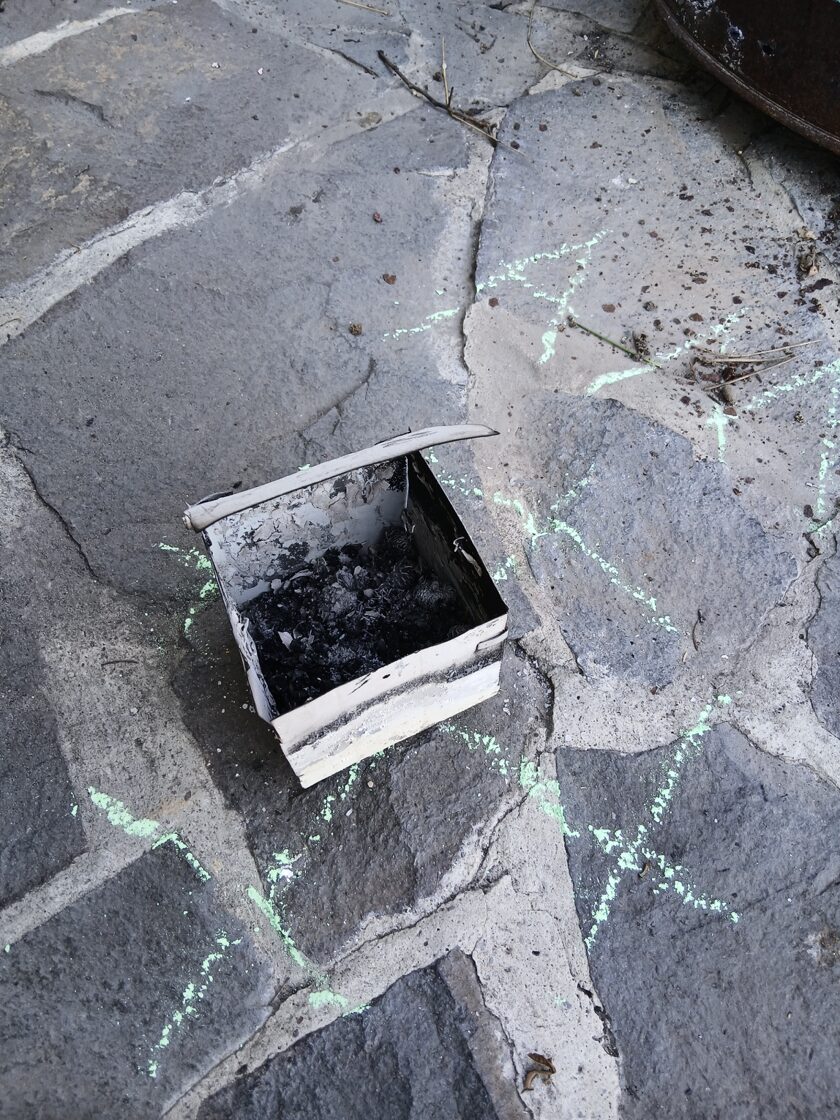
Firstly, I should probably explain what this is all about - the iron box is described in many grimoires of the Solomon tradition as the "last resort" against demons who refuse to appear or won't fulfill the magician's requests. The demon's sigil is put into the box along with sulfur and other foul-smelling ingredients like pepper and placed over a consecrated fire (or with burning coals right inside the box). After that, curses upon the spirit are recited to torment it until it complies with what is demanded.
Now that we have sorted out the surface, let us approach a more interesting layer of meanings, which usually goes unnoticed despite being much more important for a true adept. Although the grimoire tradition did not actually emerge directly from Judaism (as Peterson rightly writes in his "Techniques of Solomonic Magic"—we cannot deny its obvious close influence. Do you remember what the Jewish tefillin looks like? A black box on the head symbolizing the submission of thoughts to God, and the leather strap of the hand tefillin on the working hand which also symbolizes the submission of actions and emotions to God. Inside the head tefillin, among other texts, is placed the commandment to remember the Exodus from Egypt. This is a very important spiritual Qabalistic concept that is not about studying the history of the Jewish people, but about spiritual practice—how to start living for God instead of the earthly (actually, I described this very primitively, but to unpack this topic I would need to write a separate article). In essence, the iron box here serves as an inversion of the tefillin; that which a righteous man puts on himself to serve God brings suffering when placed upon a demon, and simultaneously "puts him in his place" because it forces him into a plane where everything obeys God alone, and if the conjurer obeys God and demands something from the demon, then the conjurer's demand is the demand of God Himself. But did the practice of scorching a sigil and a name over fire come from the Jewish tradition? The obvious answer is no.
Many testimonies of such rituals have reached our days, coming both from the ancient Egyptians themselves and from the Greek Magical Papyri. Initially, these were "state-sanctioned" cursing rituals in Egyptian temples, where a curse was a form of punishment, but eventually, in the hands of Alexandrian magicians, iron displaced the ceramic vessels of the Early Kingdom.
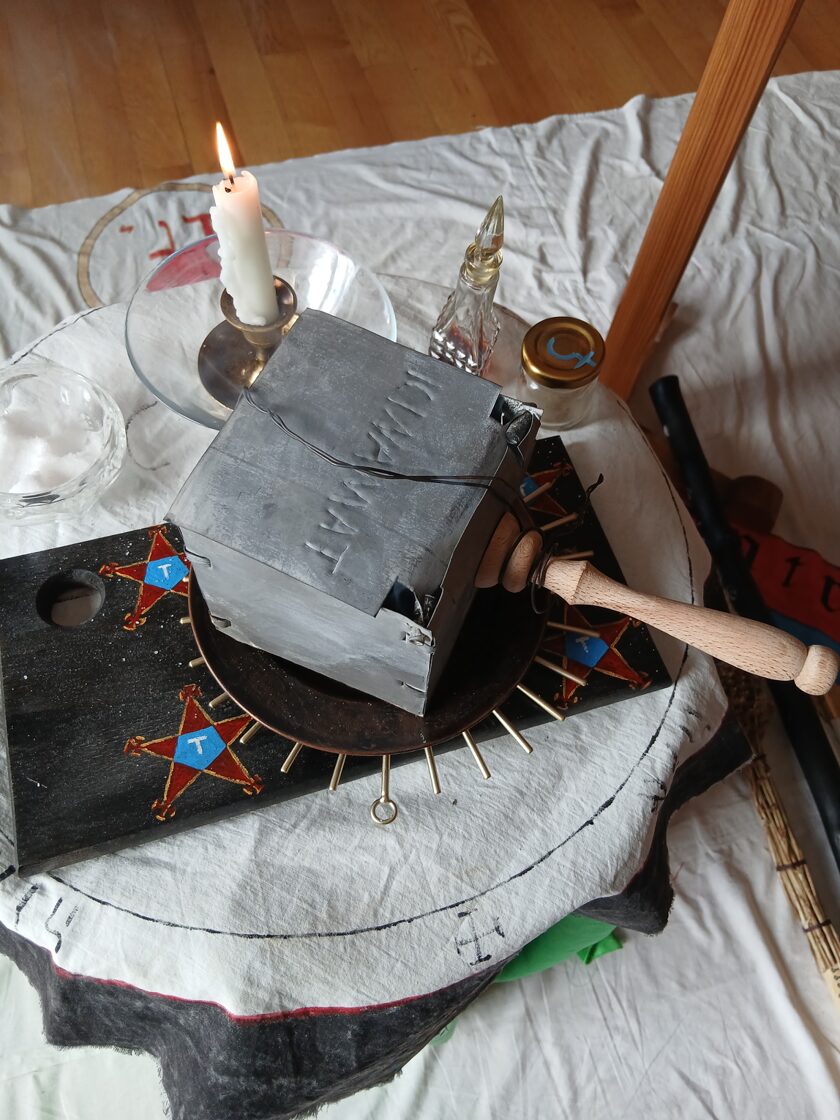
Finally, I secure the lid of the box with wire not because I could not come up with a proper latch, but because wire is explicitly specified in the texts. As for why wire exactly, I believe it is simultaneously an allusion to the "chains of punishment" and to that very same strap of the hand tefillin. Let me also mention the inscription I made on the lid of my box - ICINAMAT, if any practitioners decide to make their own box, do not write this, it is not taken from authentic sources, the meaning of this word was revealed to me during an evocation and I will not disclose it.